

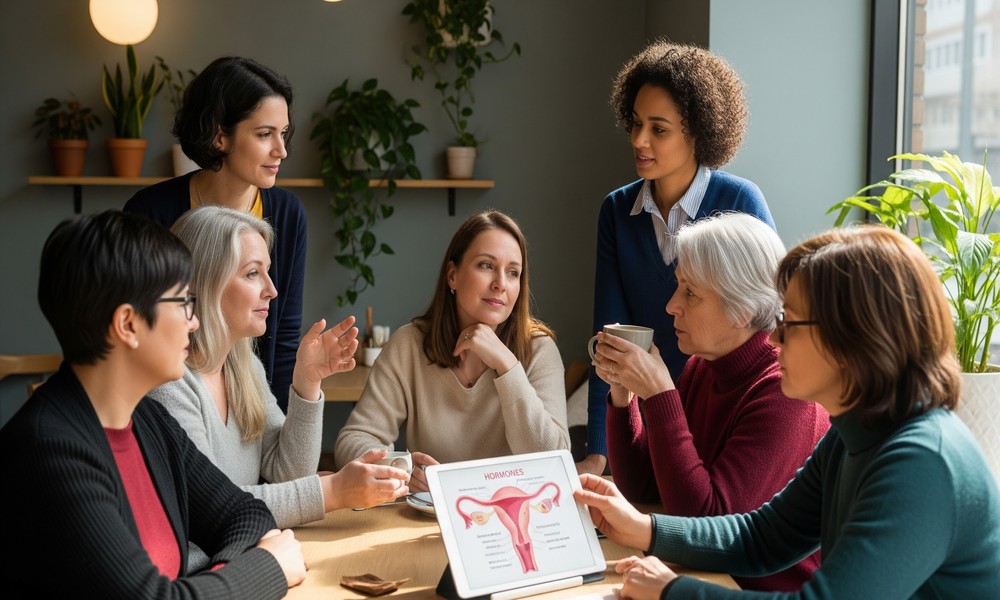
Hormones shape nearly every aspect of a woman’s reproductive life, yet their influence is often underestimated until something feels off-an irregular cycle, difficulty conceiving, persistent fatigue, or emotional changes that seem to arrive without warning. These chemical messengers regulate ovulation, menstruation, and fertility, but they also affect metabolism, bone health, cardiovascular function, and mental well-being.
Understanding hormonal balance is not just about achieving pregnancy. It is about recognizing the menstrual cycle as a reflection of overall health and appreciating how subtle shifts in endocrine signaling can ripple through the body over time.
The Menstrual Cycle as a Biological Feedback System
The menstrual cycle operates as a complex feedback loop involving the brain, ovaries, adrenal glands, thyroid, and uterus. Signals begin in the hypothalamus and pituitary gland, which release hormones that prompt the ovaries to produce estrogen and progesterone. These ovarian hormones then feed information back to the brain, adjusting future hormone release.
Each phase of the cycle-follicular, ovulatory, luteal, and menstrual-depends on precise hormonal timing. Estrogen supports follicle development and thickens the uterine lining. Progesterone stabilizes that lining after ovulation and prepares the body for a potential pregnancy. When these hormones are in balance, cycles tend to be predictable and symptoms manageable.
Disruptions in this system can lead to irregular periods, anovulation, heavy or painful bleeding, and changes in mood or energy. These signs are often dismissed as “normal,” yet they frequently indicate that the body is compensating for stressors such as inflammation, metabolic strain, or endocrine imbalance.
Hormonal Imbalance and Its Impact on Fertility
Fertility depends on more than the presence of ovulation alone. Hormones regulate egg maturation, cervical mucus quality, uterine receptivity, and even early embryonic development. As a result, menstrual cycles that appear regular may still lack the hormonal balance necessary to support conception.
Clinical evaluation often begins with a close look at menstrual patterns and hormone levels to better understand how the reproductive system is functioning as a whole. In settings that provide trusted OB-GYN care in Newton, MA, such as Newton-Wellesley Obstetrics and Gynecology, clinicians commonly approach fertility concerns through a broader lens-assessing not only pregnancy outcomes but also the hormonal and cycle health that sustain them.
This comprehensive perspective allows providers to identify conditions such as polycystic ovary syndrome (PCOS), luteal phase insufficiency, thyroid disorders, or stress-related hormonal suppression. Addressing these imbalances supports fertility while also promoting long-term reproductive and overall health, underscoring the importance of thoughtful, individualized OB/GYN care.
The Role of Estrogen and Progesterone Beyond Reproduction
While estrogen and progesterone are most commonly associated with fertility, their influence extends far beyond the ovaries and uterus. Estrogen plays a role in maintaining bone density, regulating cholesterol, supporting cognitive function, and modulating inflammation. Progesterone contributes to nervous system regulation, sleep quality, and immune balance.
When estrogen dominance or progesterone deficiency occurs, symptoms may include anxiety, breast tenderness, heavy periods, migraines, or difficulty sustaining a pregnancy. These imbalances can emerge during times of stress, postpartum recovery, perimenopause, or after prolonged hormonal contraception use.
Addressing these concerns often requires looking beyond symptom suppression and toward restoring physiologic balance through individualized care strategies.
Personalized Hormone Support in Modern Women’s Health
Advances in diagnostic testing and telehealth have expanded access to personalized hormone evaluation and treatment. Some women experience symptoms that do not meet strict diagnostic thresholds but still interfere with daily functioning and reproductive goals.
In these cases, individualized hormone support-including bioidentical hormone replacement therapy (BHRT) for women-may be explored under medical supervision. BHRT aims to mirror the body’s natural hormone structure and timing, rather than applying a one-size-fits-all approach.
Some integrative models also explore peptide therapy as part of a broader wellness plan, recognizing the interplay between hormones, metabolism, inflammation, and cellular repair. These approaches emphasize careful monitoring and adjustment rather than quick fixes, acknowledging that hormonal balance evolves over time.
Stress, Lifestyle, and the Endocrine System
Hormones do not operate in isolation. Chronic stress, inadequate sleep, nutritional deficiencies, and overexertion can all disrupt endocrine signaling. Elevated cortisol, the body’s primary stress hormone, can suppress ovulation, alter progesterone production, and interfere with thyroid function.
Women experiencing high stress levels may notice cycle changes long before fertility becomes a concern. Missed periods, shorter luteal phases, or worsening premenstrual symptoms can all signal that the body is prioritizing survival over reproduction.
Supporting hormonal health, therefore, often involves lifestyle interventions alongside medical care-addressing sleep, nutrition, movement, and emotional well-being as integral components of reproductive health.
When Fertility Treatment Becomes Part of the Journey
For some individuals and couples, even optimized hormonal balance is not enough to overcome fertility challenges. Age-related changes, genetic factors, structural conditions, or unexplained infertility may necessitate assisted reproductive technologies.
In vitro fertilization (IVF) represents one such pathway. While technologically advanced, IVF remains deeply dependent on hormonal coordination. The IVF process involves carefully timed hormone stimulation to encourage multiple follicles to mature, followed by egg retrieval, fertilization, and embryo transfer.
IVF treatments require precise monitoring to balance effectiveness with safety, ensuring that hormone levels support both egg quality and uterine receptivity. Fertility centers specializing in IVF care focus not only on laboratory techniques but also on how the body responds to hormonal intervention throughout the cycle.
Hormonal Health Across the Female Lifespan
Hormonal needs shift across different life stages-adolescence, reproductive years, postpartum, and perimenopause. Fertility-focused care often overlaps with broader concerns such as bone health, cardiovascular risk, and cognitive resilience.
Menstrual irregularities in younger women may predict future metabolic or endocrine issues, while hormonal changes later in life can affect sleep, mood, and overall vitality. Viewing reproductive hormones through a lifespan lens allows for earlier intervention and more sustainable health outcomes.
Routine menstrual tracking, hormone evaluation when symptoms arise, and proactive reproductive health care can help women understand their bodies more clearly and advocate for appropriate support.
Reframing Menstrual Cycles as a Health Indicator
Rather than treating menstrual cycles as inconvenient or secondary, many clinicians now view them as a valuable health indicator. Regular, pain-free cycles often reflect balance across multiple physiological systems. Conversely, chronic cycle disruption may signal underlying issues that deserve attention.
Recognizing this connection empowers women to seek care earlier, whether their goal is conception, symptom relief, or long-term wellness. Fertility and cycle health are not isolated concerns but part of an interconnected system that responds to both internal and external influences.
A Reflective Perspective on Hormones and Women’s Well-Being
Hormonal health is not about perfection or constant optimization-it is about responsiveness, resilience, and adaptability. For some women, restoring balance happens quickly; for others, it unfolds gradually through collaboration between patient and provider.
Fertility, menstruation, and hormonal rhythms are deeply personal experiences shaped by biology, environment, and life circumstances. When care respects that complexity, it allows space for both science and compassion to guide the journey.
By understanding hormones not as isolated problems but as part of a dynamic system, women can approach fertility and cycle health with greater awareness, confidence, and trust in their bodies-where health is not defined by outcomes alone, but by how supported and understood the journey feels.


